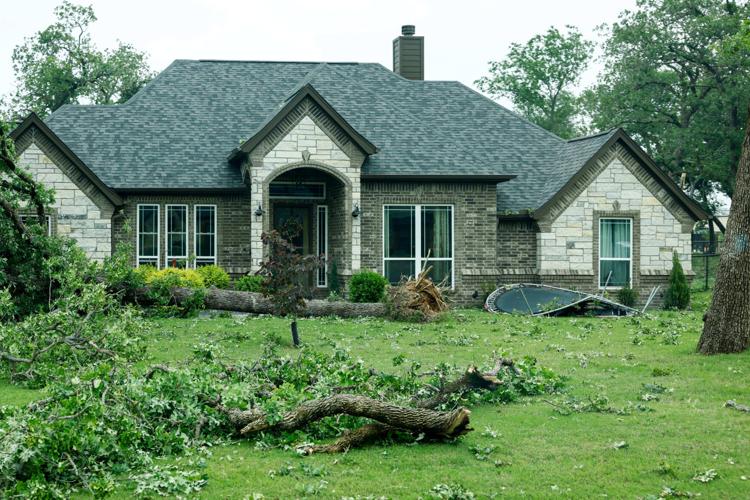
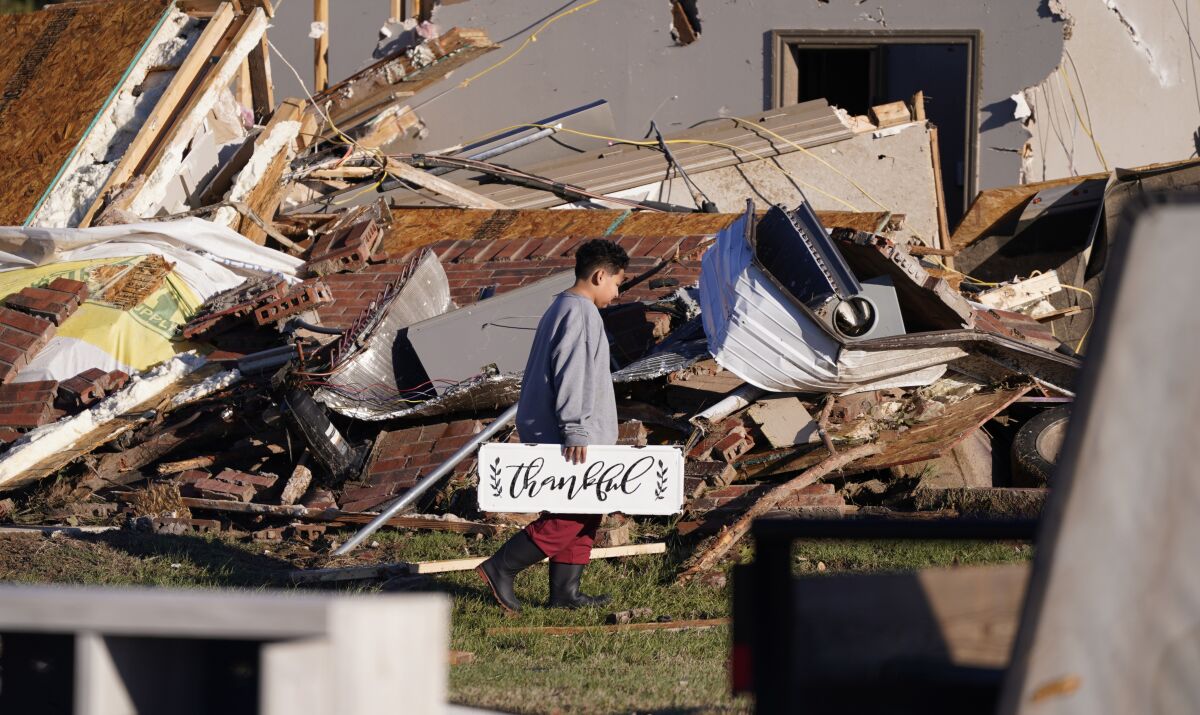
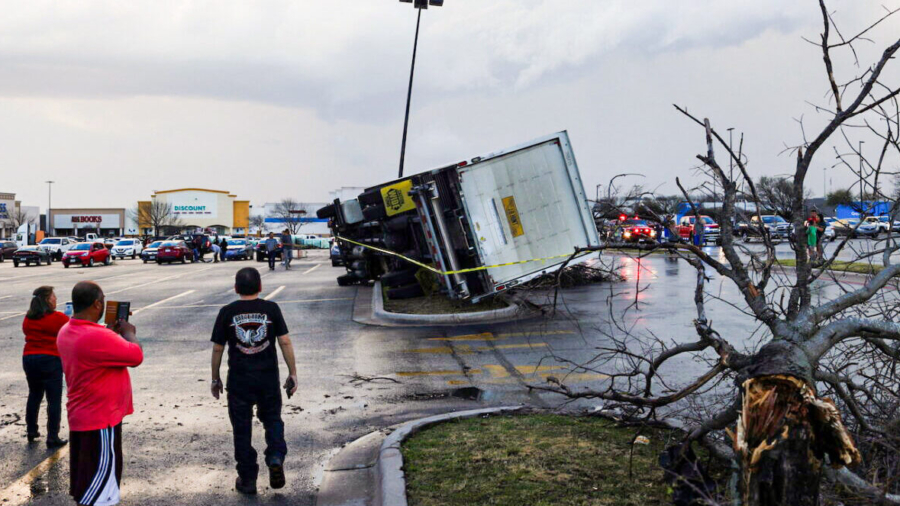
Entire neighborhoods lie in ruins. Roofs peeled back like tin cans. Vehicles tossed like toys. And, most tragically, lives lost—two confirmed dead—as a series of violent tornadoes ripped through northern Texas, leaving behind a trail of destruction that emergency crews are only beginning to assess.
This wasn’t just a storm. It was a transformation of landscape and livelihood in a matter of minutes.
Residents woke to the aftermath of nature’s fury—homes demolished, power lines downed, and the emotional toll of surviving something so sudden and severe. The National Weather Service confirmed multiple tornado touchdowns in the region, including at least one EF-3 with sustained winds over 140 mph.
The Path of Destruction
The hardest-hit areas include small towns and rural communities near the Red River, where infrastructure is sparse and emergency response times are longer. Among them, the towns of Collinsville and Nocona reported the most extensive structural damage.
In Collinsville, a mobile home park was obliterated. First responders pulled survivors from under collapsed walls and insulation, but not all made it. The two confirmed fatalities were both in single-family homes that offered little resistance to the storm’s force.
Eyewitnesses described a roar like a freight train before the sky turned green and debris began to fly.
“One second I was watching the sky, the next, my garage was gone,” said Maria Delgado, a resident of Montague County. “I got my kids under the kitchen table. We heard the roof crack—then silence. Then sirens.”
Aerial footage shows entire blocks reduced to foundations. Barns flattened. Grain silos twisted like pretzels. The scale of damage suggests multiple tornadoes touched down in a short window, a dangerous scenario known as a "tornado outbreak."
Emergency Response and Search Efforts
Local fire departments, Texas Task Force 1, and the Texas Division of Emergency Management mobilized within hours. Search and rescue teams with K-9 units combed through wreckage, checking for survivors trapped beneath rubble.
“We’re operating under the assumption that there could be more people unaccounted for,” said Captain Derek Langston of the Cooke County Sheriff’s Office. “We’re going house to house where we can access the areas. But downed trees and live wires are slowing us down.”
Hospitals in Sherman, Gainesville, and Wichita Falls reported a surge in trauma cases—mostly lacerations, fractures, and respiratory issues from dust and mold exposure. No critical injuries beyond the confirmed fatalities have been reported, but officials warn more could emerge as displaced residents seek medical help.
The Red Cross established a temporary shelter at a high school gymnasium in Decatur, offering food, water, and cots to over 120 displaced individuals. Mental health counselors are on-site to assist survivors dealing with shock and anxiety.
Why Northern Texas Is Vulnerable
Northern Texas sits in a unique atmospheric crossroads—where cold, dry air from the Rockies collides with warm, moist air from the Gulf of Mexico. This clash fuels powerful thunderstorms, especially in spring and early summer.
But recent trends suggest tornadoes are becoming more unpredictable.
Historically, “Tornado Alley” referred to a swath from western Texas through Oklahoma and into Kansas. Now, meteorologists are observing increased activity in what they’re calling the “Dixie Alley” extension—eastern Texas into the Southeast. However, northern Texas remains a hotspot due to its flat terrain and frequent storm convergence zones.
Contributing Factors: - Flat topography allows storms to maintain strength - Proximity to dry lines and frontal boundaries - High population of older or manufactured homes with weaker structural integrity - Limited access to underground shelters in rural areas
Many homes in the affected areas were built before modern wind-resistance codes. Mobile homes, in particular, are exceptionally vulnerable—even an EF-1 tornado can completely destroy them.
Surviving the Unpredictable: Lessons from This Outbreak
Survival often comes down to preparation, timing, and access to shelter.
Consider the case of the Thompson family in Pilot Point. They survived an EF-2 tornado with only minor injuries because they had a backyard storm shelter installed three years ago. “We heard the warning with about 12 minutes to spare,” said James Thompson. “We got the kids, the dog, and our go-bag. We didn’t hesitate.”
Their story underscores a critical point: having a plan and a safe place to go can mean the difference between life and death.
Common Mistakes During Tornado Events: - Waiting too long to take cover - Staying in a mobile home or vehicle - Taking shelter under highway overpasses (dangerous due to wind tunnel effects) - Not having a battery-powered weather radio - Relying solely on smartphone alerts (networks often fail during storms)
Texas does have a robust emergency alert system—through Wireless Emergency Alerts (WEAs), NOAA Weather Radio, and local sirens. But not all areas are equally covered. Rural communities often lack sirens, and older residents may not own smartphones capable of receiving alerts.
Infrastructure Damage and Long-Term Recovery
Beyond human loss, the economic and infrastructural toll is mounting.
Preliminary estimates suggest over 150 homes were destroyed, with hundreds more sustaining moderate to severe damage. Power outages affected more than 8,000 customers across five counties. Oncor Electric reported downed transmission lines and damaged substations, with full restoration expected to take several days.
Insurance adjusters are already on the ground, but many residents may be underinsured or lack tornado-specific coverage. Standard homeowners insurance covers wind damage, but flood damage—often concurrent with severe storms—is typically excluded unless a separate policy is held.
Rebuilding will take months, if not years. And for elderly or low-income residents, recovery may be nearly impossible without federal aid.
The Federal Emergency Management Agency (FEMA) has activated preliminary damage assessment teams. If the governor declares a state of disaster, federal assistance could become available for repairs, temporary housing, and low-interest loans.
Climate Trends and Future Risk
While no single tornado can be directly attributed to climate change, scientists agree that warming temperatures are altering storm patterns.
A 2023 NOAA study found that tornado outbreaks—clusters of multiple tornadoes over a short period—are becoming more frequent, even if the total annual tornado count remains stable. Warmer Gulf waters are feeding more moisture into storm systems, increasing instability.
Additionally, the timing of peak tornado season appears to be shifting earlier in the year. Storms that once peaked in April and May are now occurring as early as February.
This shift challenges emergency preparedness systems that rely on seasonal patterns. Communities may not be mentally or logistically ready for a major outbreak in March.
How Communities Can Prepare for the Next Storm
Waiting for a disaster to strike before preparing is a gamble with deadly stakes.
Effective preparedness isn’t just about having a shelter—it’s about a culture of readiness.
Key Steps for Residents: - Identify the safest room in your home (interior bathroom, closet, or basement) - Build a tornado emergency kit: flashlight, batteries, first-aid supplies, water, N95 masks - Install a NOAA Weather Radio with battery backup - Practice tornado drills with family, especially children - Know the difference between a watch and a warning
Local governments can also do more: - Expand siren coverage in rural areas - Offer tax incentives for storm shelter installation - Partner with schools and churches to serve as community shelters - Conduct regular public education campaigns
Technology helps, but only if it’s accessible. Apps like the American Red Cross Tornado app or the FEMA app provide real-time alerts and shelter locations. But again—these depend on power and cellular service, which often fail during storms.
A Community in Recovery In the days ahead, northern Texas will face difficult questions.
How do you rebuild when the ground beneath you feels unstable—literally and figuratively?
How do you honor the lives lost while moving forward?
Memorials have already begun to form at the edges of destroyed neighborhoods—flowers, photos, homemade signs. One reads: “We rise with the wind, not against it.”
Resilience here isn’t just about stronger homes. It’s about stronger networks—neighbors checking on neighbors, volunteers delivering supplies, and mental health workers offering quiet support.
The storm passed. But its impact will echo for years.
For now, the focus remains on recovery: finding the missing, treating the injured, and helping families take their first steps toward normalcy.
This tragedy underscores a brutal truth: tornadoes don’t discriminate. They strike fast, they strike hard, and they leave behind a need for immediate action and long-term planning.
If there’s a lesson from northern Texas, it’s this—preparedness isn’t paranoia. It’s survival.
FAQ
How many tornadoes hit northern Texas in this outbreak? At least four tornadoes were confirmed by the National Weather Service, with multiple touchdowns across Cooke, Montague, and Grayson counties.
Were there any warning signs before the tornadoes struck? Yes—NOAA issued tornado watches hours in advance, and warnings were pushed to phones via Wireless Emergency Alerts about 10–15 minutes before touchdown.
What should I do if I live in a mobile home during a tornado? Evacuate to a sturdier building or community shelter if possible. Mobile homes are unsafe during tornadoes, even with anchor systems.
Is federal aid available for affected residents? FEMA assessment teams are on-site. If a federal disaster declaration is issued, aid for housing, repairs, and low-interest loans may become available.
How can I help tornado victims in northern Texas? Donate to the Red Cross, Texas VOAD (Voluntary Organizations Active in Disaster), or local food pantries. Avoid unsolicited goods—cash donations are most effective.
Do tornadoes happen often in northern Texas? Yes—northern Texas sees an average of 50–70 tornadoes per year, with peak activity in April and May.
Can I install a storm shelter in an existing home? Yes—both above-ground and in-ground shelters can be retrofitted. FEMA offers up to $3,000 in reimbursement through its Hazard Mitigation Grant Program.
What mistakes should you avoid? Avoid generic choices, weak validation, and decisions based only on marketing claims.
What is the next best step? Shortlist the most relevant options, validate them quickly, and refine from real-world results.