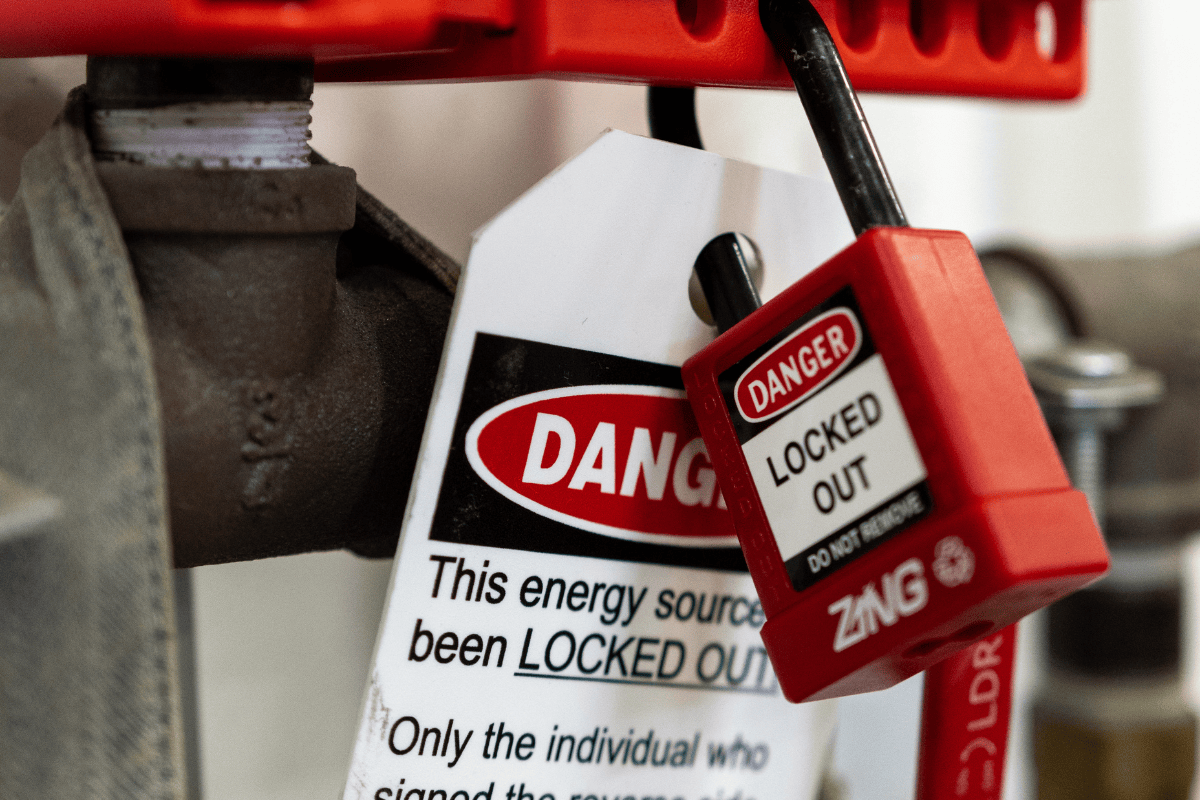
A machine powers down for maintenance, but someone unknowingly hits the start button. The unexpected startup crushes a technician’s hand. This isn’t a rare scenario—it’s a preventable tragedy. At the heart of avoiding such incidents is a small but indispensable tool: the lockout tag.
A lockout tag is a visual and physical warning device attached to energy-isolating equipment during maintenance or servicing. It signals that the machine is unsafe to operate and that only the authorized person who applied the tag may remove it. Combined with a lock, this system forms part of a broader safety protocol known as Lockout/Tagout (LOTO)—a procedure mandated by OSHA and adopted worldwide to control hazardous energy.
But a lockout tag is more than a piece of plastic on a valve or switch. It’s a final line of defense when systems fail, communication breaks down, or human error creeps in.
The Anatomy of a Lockout Tag
Not all tags are created equal. A proper lockout tag must meet several functional requirements to be effective:
- Durable material – Resistant to tearing, moisture, oil, and UV exposure
- Clear warning text – Phrases like “Do Not Operate,” “Machine Under Repair,” or “Danger – Authorized Personnel Only”
- Space for identification – A field for the worker’s name, department, and date/time of application
- Attachment point – A hole or slot for pairing with a lock or zip tie
- Standardized color – Red, orange, or yellow are common, with red signaling the highest level of danger
Most industrial lockout tags are made from laminated polyester or vinyl. They’re designed to last through harsh conditions—chemical plants, refineries, and manufacturing floors where temperature swings, grime, and constant handling are the norm.
Some advanced versions include barcode fields or QR codes, allowing digital tracking within a facility’s safety management system.
How a Lockout Tag Works in Practice
Imagine a conveyor belt system in a food processing plant needs motor replacement. Here’s how a lockout tag fits into the real-world workflow:
- Preparation – The technician identifies all energy sources: electrical, hydraulic, pneumatic, and gravity-fed components.
- Shutdown – The machine is turned off using standard procedures.
- Isolation – Disconnect switches, circuit breakers, or valves are physically isolated.
- Lock Application – A personal lock is placed on each isolation point.
- Tag Attachment – A lockout tag is affixed to each lock, displaying the technician’s name, start time, and reason for shutdown.
- Energy Dissipation – Stored energy (like pressurized lines or elevated parts) is safely bled off.
- Verification – The technician tests for zero energy—trying to start the machine (without removing the lock) to confirm it won’t activate.
The tag remains until the job is complete. Only the person who applied it can remove it—no exceptions. This rule, known as personal responsibility, prevents others from making assumptions about safety status.
Lockout Tag vs. Lockout Lock: What’s the Difference? Many confuse the tag with the lock. While they work together, their roles differ:

| Feature | Lockout Tag | Lockout Lock |
|---|---|---|
| Primary Function | Communication | Physical restraint |
| Prevents operation? | No (only warns) | Yes (mechanically blocks) |
| Required by OSHA? | Yes, as part of LOTO | Yes |
| Removable by others? | Should not be, but possible | Only with proper authority or override |
| Material | Plastic, laminated | Metal (e.g., brass, steel), with insulated shackle |
Tags alone don’t stop a machine from starting. A determined or unaware worker can still remove a tag and operate equipment. That’s why a tag without a lock is incomplete—and unsafe. The lock physically prevents access; the tag explains why.
When Tags Fail: Common Mistakes and Consequences
Even robust systems break down due to poor execution. These are frequent missteps in lockout tagging:
- Blank or incomplete tags – Missing names or dates make accountability impossible.
- Shared locks or tags – Using “department locks” instead of personal ones undermines responsibility.
- Tag-only procedures – Skipping the lock because “it’s just a quick fix.”
- Ignoring stored energy – Failing to release tension, pressure, or residual charge.
- Poor placement – Tags stuck where they’re not visible or easily ripped off.
In 2022, an investigation by the Chemical Safety Board revealed that 37% of industrial fatalities involving machinery could be traced back to incomplete or bypassed LOTO procedures—many where tags were present but locks were missing or improperly used.
One plant had tags that read “Under Maintenance” but no locks on electrical panels. A relief worker, unaware of ongoing repairs, re-energized the system—resulting in a fatality.
Tags are only as strong as the culture behind them.
Real-World Use Cases: Where Lockout Tags Save Lives
Lockout tags aren’t theoretical—they’re deployed daily in high-risk environments.
Case 1: Automotive Manufacturing On an assembly line, robotic arms perform welding. During calibration, a technician applies a lock and tag to the main control panel. Another team member attempts to test the line but sees the tag and stops. The tag includes a QR code that links to the maintenance log—confirming the work is still in progress.
Case 2: Water Treatment Facility A pump requires impeller replacement. The electric disconnect is locked out, and a tag lists the worker’s name and expected completion time. When a shift change occurs, the tag alerts incoming staff to the hazard—preventing accidental restart during handover.
Case 3: Hospital Equipment Maintenance An MRI machine must be serviced. Though not “industrial,” it contains powerful magnetic fields and cryogenic systems. A lockout tag on the power feed prevents activation while technicians service it—avoiding both electrical hazards and potential quench events.
These scenarios show that lockout tagging isn’t just for factories. Anywhere energy poses a risk, a tag adds a layer of human awareness.
Top 5 Lockout Tags Used in Industry
Not all lockout tags are the same. Facilities choose based on durability, compliance, and integration needs. Here are five widely used types:
- Brady B-LOTO-TAG-100
- - Material: Polyester, oil-resistant
- - Features: Write-on fields, barcode-ready, OSHA-compliant text
- - Best for: High-volume environments with digital tracking
- Master Lock 1350T Heavy-Duty Tag
- - Material: Laminated vinyl
- - Features: 4x6 inches, bold red and yellow design, tie-on slot
- - Best for: General industrial use, outdoor durability
- Seton SafetyLockout Tag with Pencil Loop
- - Material: Plastic-coated paper
- - Features: Integrated pencil holder, tear-resistant
- - Best for: Quick tasks, cost-sensitive operations
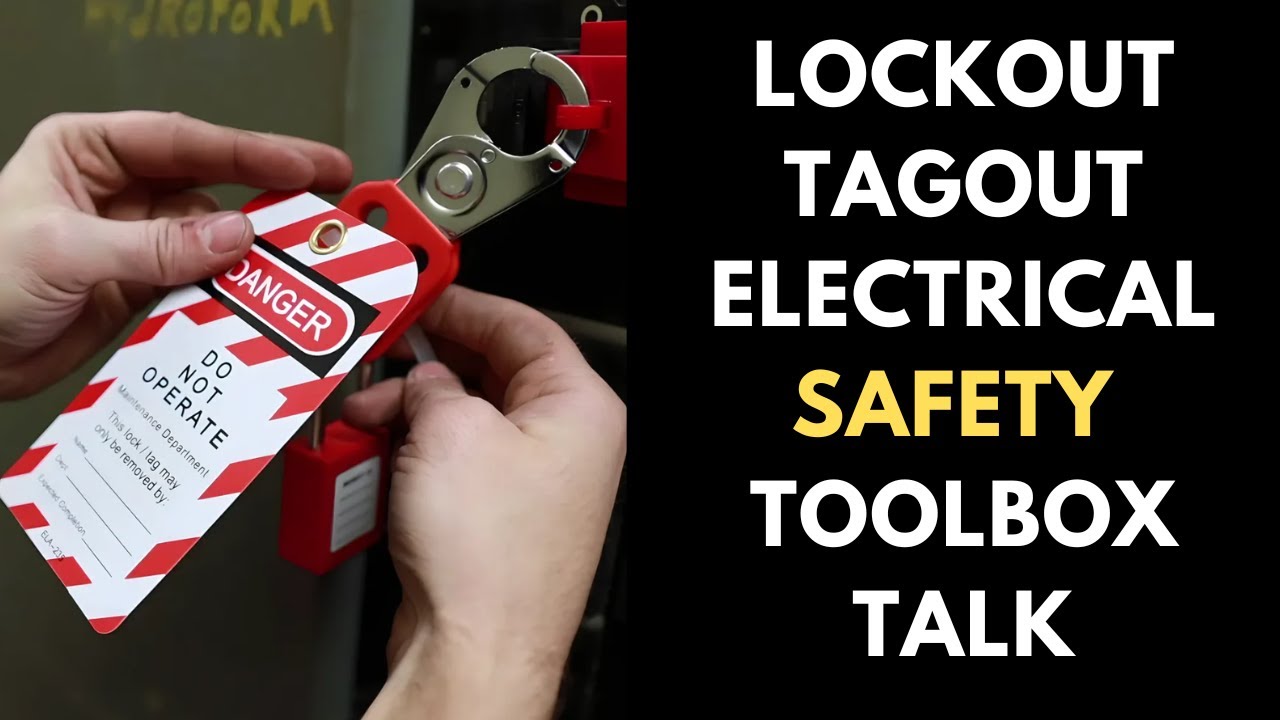
- Grace Industries Universal LOTO Tag
- - Material: 10-mil polyester
- - Features: Multilingual warnings (EN/ES/FR), QR code field
- - Best for: Multinational or multilingual teams
- DuraLabel LOTO Pro Custom Tag
- - Material: Thermal-transfer printed polyester
- - Features: Fully customizable text and logos, barcode integration
- - Best for: Facilities with branded safety programs or ERP integration
Each of these supports compliance but differs in application context. A refinery may need chemical-resistant Brady tags, while a small warehouse might opt for cost-effective Seton tags for routine checks.
Regulatory Compliance: OSHA and Beyond
In the United States, OSHA’s 29 CFR 1910.147 governs the Control of Hazardous Energy (Lockout/Tagout). It explicitly requires:
- Written energy control procedures
- Employee training
- Periodic inspections (at least annually)
- Use of locks and tags that are “durable, standardized, and substantial”
While the standard allows tagout-only systems in certain cases (e.g., when locks can’t be used), it mandates additional safety measures—like extra verification steps—because tags alone are less reliable.
Other countries have similar frameworks: - Canada: CSA Z460-20 - UK: The Provision and Use of Work Equipment Regulations (PUWER) - Australia: AS/NZS 4836:2011
Non-compliance isn’t just a fine—it’s a risk to life. OSHA penalties for LOTO violations can exceed $15,000 per instance, and willful violations reach $156,259.
Building a Culture Around Lockout Tags
The best tag in the world fails if workers bypass it. Safety isn’t just equipment—it’s behavior.
Effective programs do more than distribute tags. They: - Train employees on why LOTO matters, not just how - Conduct surprise audits of lockout procedures - Empower any worker to stop work if a tag is missing or questionable - Use near-miss reporting to improve protocols
One plant reduced LOTO incidents by 78% in two years simply by adding a “tag buddy” system—where a second worker verifies each lock and tag application.
A tag isn’t just a sign. It’s a promise: This machine is not safe. I am inside. Do not start it.
Final Thoughts
A lockout tag is a simple tool with life-or-death consequences. It bridges the gap between mechanical safety and human awareness. Used correctly—with a lock, proper procedure, and a culture of accountability—it prevents injuries, ensures compliance, and protects both workers and operations.
Don’t treat it as paperwork. Treat it as a lifeline.
Apply it personally. Verify it daily. Respect it always.
FAQ
What does a lockout tag do? A lockout tag warns that equipment is undergoing maintenance and should not be operated. It identifies the authorized worker and provides critical safety information.
Can you use a tag without a lock? Only in rare cases where a lock can’t be applied. OSHA allows tagout-only systems but requires extra protective measures due to higher risk.
Who can remove a lockout tag? Only the authorized employee who applied it. No one else should remove it, even for operational reasons.
Are lockout tags required by law? Yes, under OSHA 29 CFR 1910.147 and similar regulations worldwide, lockout tags are mandatory in energy control procedures.
What information must be on a lockout tag? It must include the name of the authorized employee, the date, and a clear warning like “Do Not Start” or “Under Maintenance.”
How long can a lockout tag stay on equipment? Until the maintenance is complete and the authorized worker verifies it’s safe to re-energize. Tags should never be left indefinitely.
What happens if someone removes a lockout tag? It’s a serious safety violation. Unauthorized removal can lead to injury, disciplinary action, or legal consequences.
FAQ
What should you look for in What Is a Lockout Tag and Why It Matters in Safety? Focus on relevance, practical value, and how well the solution matches real user intent.
Is What Is a Lockout Tag and Why
It Matters in Safety suitable for beginners? That depends on the workflow, but a clear step-by-step approach usually makes it easier to start.
How do you compare options around What Is a Lockout Tag and Why It Matters in Safety? Compare features, trust signals, limitations, pricing, and ease of implementation.
What mistakes should you avoid? Avoid generic choices, weak validation, and decisions based only on marketing claims.
What is the next best step? Shortlist the most relevant options, validate them quickly, and refine from real-world results.